Task List
|
Task # |
Task |
Performed by |
|---|---|---|
|
1 |
Prepare SolarWinds for use with CI Sync |
SolarWinds Orion Admin |
|
2 |
Understand the CI Sync RecVer Database |
SQL DBA
|
|
3
|
Create a Source System Connection using the CI Sync Agent Config Utility with a SQL RecVer DB |
Infrastructure SME
|
|
3
|
Or, Create a Source System Connection using the CI Sync Agent Config Utility with a MongoDB RecVer DB (if supported) |
Infrastructure SME
|
|
4 |
Finalise Settings in the CI Sync SaaS UI |
CI Sync Admin |
|
5 |
Perform Updates in ServiceNow (if required) |
ServiceNow Admin |
Task 1: Prepare SolarWinds for use with CI Sync
The follow pre-requisites are required to prepare SolarWinds for use with the CI Sync Agent.
-
You will need the URL of your SolarWinds Orion platform.
-
You will need details of a user/account for the CI Sync Agent to authenticate to the SolarWinds Orion platform. Of note:
-
Syncfish recommend a dedicated account is used (i.e. one created specifically for the CI Sync Agent).
-
Syncfish recommend the account has read-only access, has least privilege access and meets your internal security standards for an integration account to access SolarWinds.
-
You will need the username and password of the above account.
-
Please reach out to your Syncfish contact person for additional assistance with the source system setup/configuration.
Task 2: Understand the CI Sync RecVer Database
This “task” is solely about understanding the purpose of the CI Sync RecVer database and making decisions on where to host it and how the CI Sync Agent will authenticate to it.
You may also need to make a decision on which database technology to use for the RecVer Database. The CI Sync Agent supports both MS SQL and MongoDB for the RecVer database (however there are some restirctions on which database technology you can use depending on the source system itself).
Understanding the above topics and making the relevant decisions before you create the source system connection (via the CI Sync Agent Config Utility) will make it quicker/easier to execute the remaining tasks in this guide.
Task 3 (SQL): Create a Source System Connection using the CI Sync Agent Config Utility with a SQL RecVer DB
As explained in the preceding “task” there are two options to facilitate the creation of the RecVer database and assigning permissions to it for the CI Sync (Agent). The table below elaborates the two options.
|
Option |
Description |
Details |
|
MS SQL Setup Option 1 |
Automatically using the CI Sync Agent Config Utility |
|
|
MS SQL Setup Option 2 |
Manually via a SQL Database Administrator (DBA) |
|
Expand the instructions below for either Option 1 or Option 2.
Option 1: Use the Config Utility to automatically create the RecVer database
Expand the instructions below to let the CI Sync Config Utility automatically create the CI Sync RecVer database (and set the required permissions to both the RecVer and Lansweeper SQL DBs).
Click to expand the instructions to setup the source connection with a SQL RecVer using Option 1
-
Run the “CISynchronizerAgent Config Utility” from the Windows Start Menu.
-
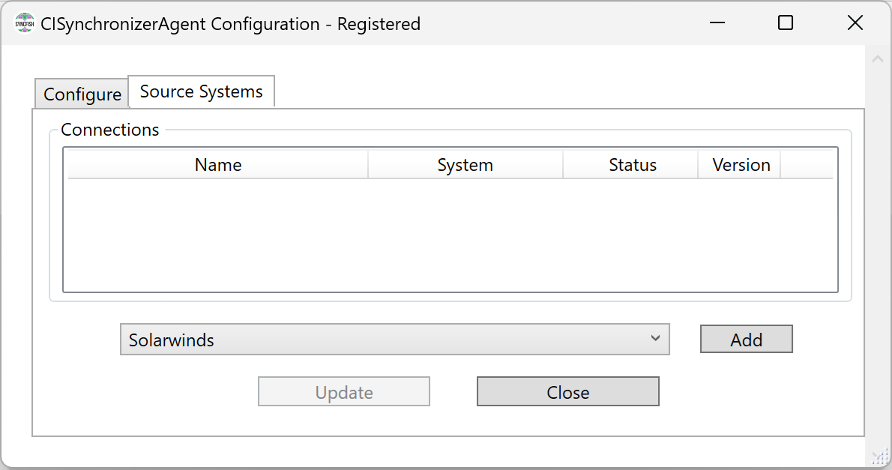
Within the CI Sync Agent Configuration Utility, navigate to the Source Systems tab, select Solarwinds and click the Add button.
-
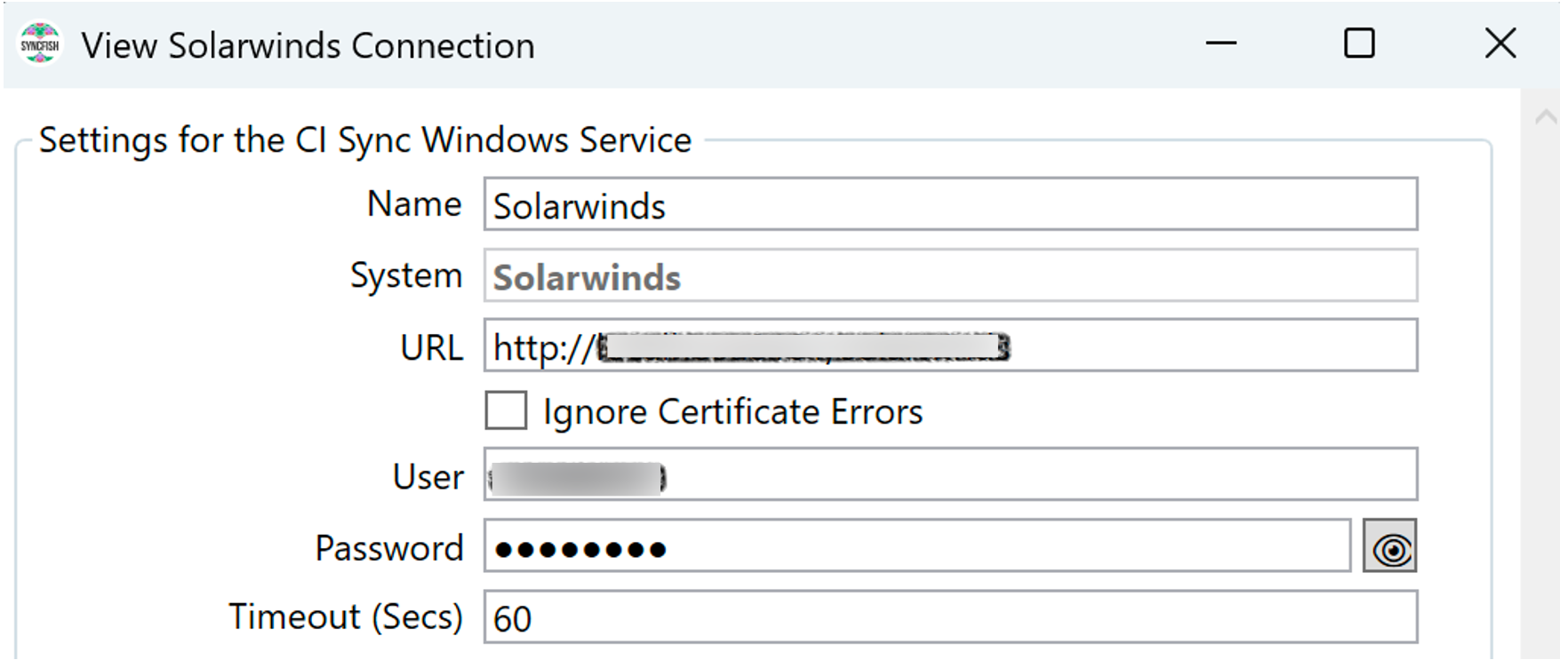
The “Add Connection” form is shown (specific to the source system).
-
In the section titled “Settings for the CI Sync Windows Service” update the values as follows:
-
Name: Enter a friendly name that describes this source system connection.
-
URL: Enter the URL to the SolarWinds Orion platform identified in the very first task at the top of this guide.
-
User: Enter the username of the user created in the very first task at the top of this guide.
-
Password: Enter the password for the user created in the very first task at the top of this guide.
-
Timeout: Syncfish recommend initially setting this to 60 seconds.
-
-
Move to section titled “RecVer DB Settings”
-
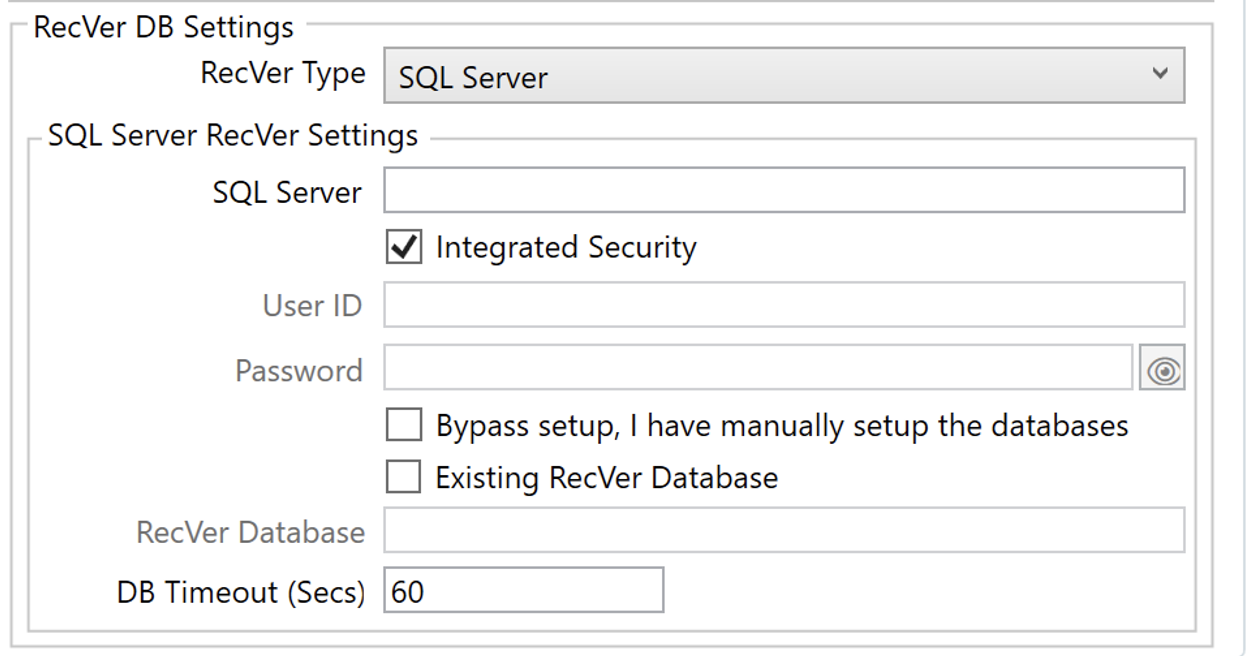
Update the “RecVer DB Settings” values as follows:
-
RecVer Type: Set this to SQL Server.
-
-
In the sub-section titled “SQL Server RecVer Settings” update the values as follows:
-
SQL Server: Enter the SQL Server path in the format: server\instance.
-
Integrated Security:
-
Check this checkbox if you want the CI Sync Agent to authenticate to the SQL Server using the Windows User Account you setup for the CI Sync Agent Windows Service (i.e. the account you setup in Task 1: Create Windows Service Account for the CI Sync Agent to use during S4 - Install the On-Prem Multi-Source Agent.
-
Otherwise, uncheck this checkbox and enter the User ID and Password for a Native SQL Login provided to you by the DBA. (Note: Syncfish do not recommend the SQL Login have sysadmin rights).
Note: These authentication settings control how the CI Sync Agent Windows Service authenticates with your SQL Server during ongoing operation of the agent (I.e. when sync jobs are running).
-
-
Bypass setup, I have manually setup the databases: Do NOT check this checkbox (because the Config Utility will be creating the RecVer database for you).
-
Existing RecVer Database: Do NOT check this checkbox (as the Config Utility will create the RecVer database for you).
Note: These RecVer tick boxes (Bypass setup and Existing RecVer) control whether the CI Sync Config UI initiates the setup of the RecVer database (or not if your DBA is doing the SQL setup manually). -
RecVer Database: Greyed out so can be ignored.
-
DB Timeout (Secs): Sets the connection and statement execution timeouts. Syncfish recommend 60.
-
-
Locate the “Setup & Test” button

-
Do the following:
-
Click the “Setup & Test” button.
-
When the button “Setup & Test” is pressed, the CI Configuration utility will prompt if the user running the utility wants to use Integrated Security or SQL Server security to perform the automated SQL setup and configuration steps.
-
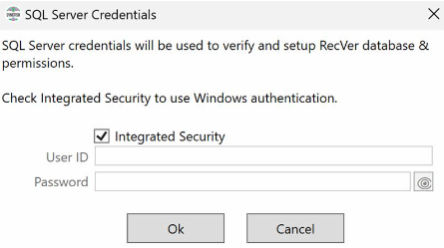
Informational Note
-
The above values do not control the ongoing running of the CI Sync Agent, they are solely used by the CI Sync Config UI to perform the RecVer setup.
-
The user will be required to have admin role in SQL Server to be able to setup the RecVer
Guidance Notes
In the background the Config Utility performs the following SQL setup and configuration steps:
-
The utility creates a SQL Login for the Windows User Account you setup for the CI Sync Agent Windows Service if you selected “Integrated Security” in the section “Settings for the CI Sync Windows Service”, the Config Utility. Or, if instead you are using Native SQL Login (instead of “Integrated Security”) then Config Utility uses the Native SQL Login details you have supplied and performs the following step to grant the Login access to the relevant databases with the permissions noted below.
-
The utility creates the RecVer database, creates a SQL user in the RecVer database for the Login used by the CI Sync Agent and grants the SQL user the agent_role role.
Note: Depending on whether you selected “Integrated Security” or not, the SQL user is either (a) the Windows User/Service Account (created as a SQL Login in point 1 above) or (b) the native SQL login account.
Note: If you are using a Native SQL Login (not Integrated Security) with higher privileges than noted above (e.g. if the account had SQL sysadmin) then the Config Utility will not be able to set the SQL roles noted above. Instead, the Config Utility will not touch the permissions and instead will leave the existing/higher privileges as is. This is not required and not recommended by Syncfish.
-
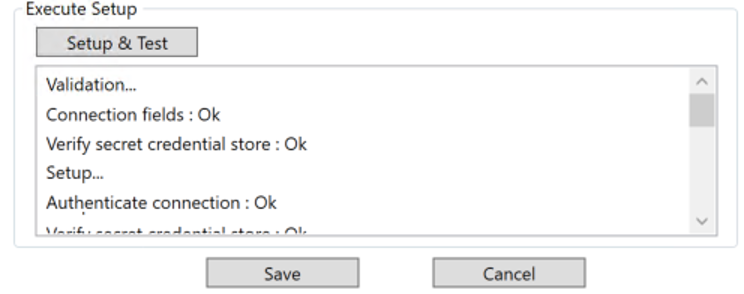
If all is setup correctly you will see “Ok” against each of the setup tasks. If you see errors recheck the values you entered on the form.
-
After a successful test has been completed, click the Save button.
-
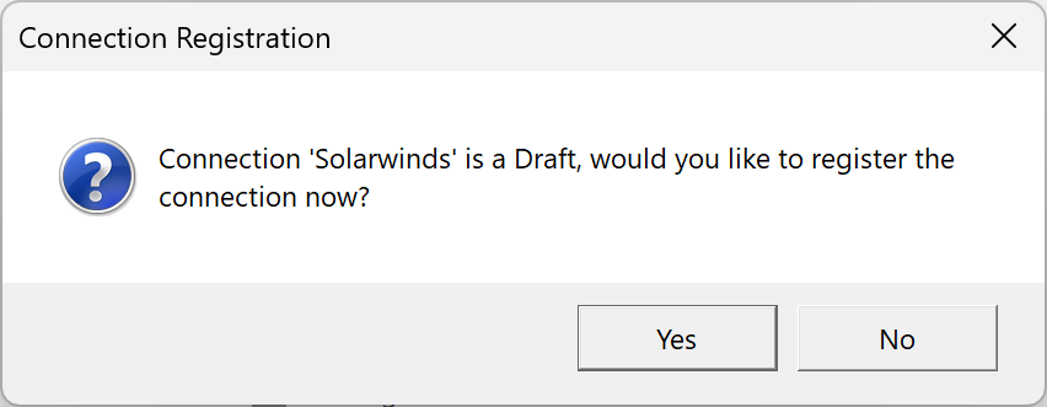
Finally, click Yes to register this new connection (via your CI Sync Agent) with your customer specific CI Sync SaaS instance.
-
Assuming no errors you will see a confirmation message. Click OK and the new connection will appear in the Connections List of the CI Sync Agent.
-
You have now completed the setup of the source connection in the CI Sync Configuration Utility and registered it as a source connection in the CI Sync SaaS application.
Option 2: Use your SQL Database Administrator (DBA) to manually create the RecVer database in advance
Expand the instructions below if your SQL DBA will manually setup the RecVer database (and set the required permissions to both the RecVer and Lansweeper SQL DBs).
Click to expand the instructions to setup the source connection with a SQL RecVer using Option 2
-
Ask you SQL DBA to perform the tasks listed in the table below.
|
Task |
DBA Task (in SQL Server) |
Additional Notes |
|
Task 1 |
Either register a Login (which represents the Windows User Account used by the CI Sync Agent Windows Service) Or create a SQL Login (for the CI Sync Agent to use). |
If you are using Windows “Integrated Security” between the CI Sync Agent and the SQL Server, then the CI Sync Agent Windows Service account needs to be registered within SQL Server as a Login. Note: The CI Sync Agent Windows Service account you setup in Task 1: Create Windows Service Account for the CI Sync Agent to use during S4 - Install the On-Prem Multi-Source Agent. Alternatively, if you are using Native SQL authentication between the CI Sync Agent and the SQL Server, then a Login will need to be created. In this case your DBA will need to provide you with the SQL User ID and password details so you can enter them into the Config Utility UI as explained further below. |
|
Task 2 |
Edit then Execute the SQL Script provided by Syncfish located here. The script creates the Syncfish RecVer database. The script is: Cisee-recver-create-script.sql |
Notes for the DBA when running the script:
> sqlcmd -I -S localhost -v database_name=" cisee_recver_solarwinds" -i "cisee-recver-create-script.sql"
|
|
Task 2 |
Edit then Execute the SQL Create Script provided by Syncfish located here. The script creates the Syncfish RecVer database. The script is: cisee-recver-create-script.sql |
Notes for the DBA when running the script:
To run the setup script using the sqlcmd utility, the recver_database_name parameter needs to be passed in using the -v switch:
Or, if running the script in SSMS, the value $(recver_database_name) (including the $ and brackets) needs to be replaced in the .sql file with the name for the recver database. The DBA may notice the script includes has a placeholder called $(source_database_name) which is only required when Lansweeper is the source system. This placeholder can be ignored for all other (non-Lansweeper) source systems. |
|
Task 3 |
Edit then Execute the SQL Upgrade Script provided by Syncfish located here. The script creates the Syncfish RecVer database. The script is: cisee-recver-upgrade-script-3.1.1.sql |
Notes for the DBA when running the script:
To run the setup script using the sqlcmd utility, the database_name parameter needs to be passed in using the -v switch: > sqlcmd -I -S localhost -v recver_database_name=" cisee_recver_solarwinds" -i "cisee-recver-upgrade-script-3.1.1.sql" Or, if running the script in SSMS, the value $(recver_database_name) (including the $ and brackets) needs to be replaced with the name for the recver database. |
|
Task 4 |
Map the Login as a user in the RecVer database and grant the user the role_agent role. |
Map the user and grant the role to the RecVer database created by the SQL script above. |
Once your DBA has completed the steps in the table above, use the CI Sync Agent Configuration Utility to setup the source connection and pointing to the RecVer database created by the DBA. See below for instructions on using the CI Sync Agent Configuration Utility.
-
Run the “CISynchronizerAgent Config Utility” from the Windows Start Menu.
-
Within the CI Sync Agent Configuration Utility, navigate to the Source Systems tab, select Solarwinds and click the Add button.
-
The “Add Connection” form is shown (specific to the source system).
-
In the section titled “Settings for the CI Sync Windows Service” update the values as follows:
-
Name: Enter a friendly name that describes this source system connection.
-
URL: Enter the URL to the SolarWinds Orion platform identified in the very first task at the top of this guide.
-
User: Enter the username of the user created in the very first task at the top of this guide.
-
Password: Enter the password for the user created in the very first task at the top of this guide.
-
Timeout: Syncfish recommend initially setting this to 60 seconds.
-
-
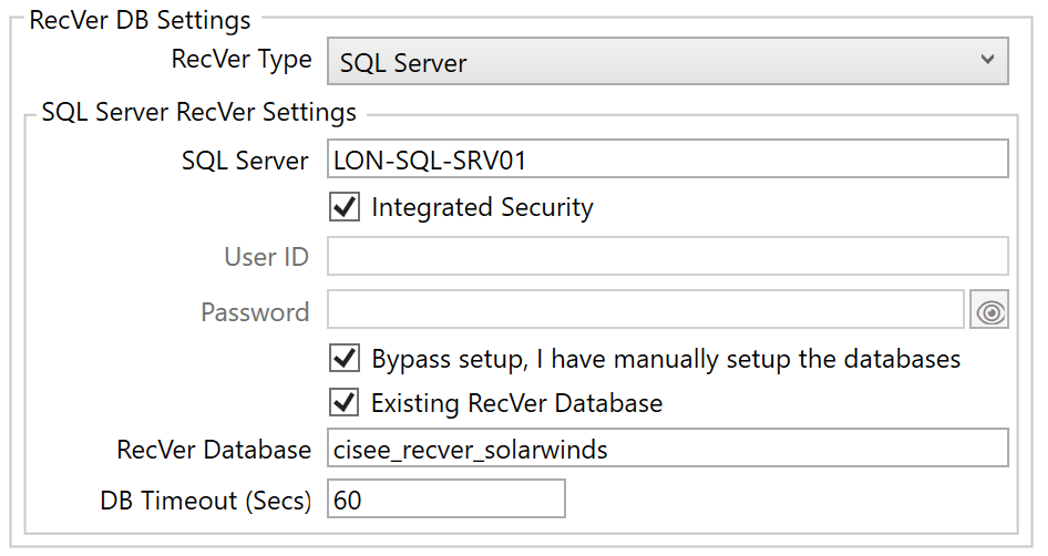
Move to section titled “RecVer DB Settings”
-
Update the “RecVer DB Settings” values as follows:
-
RecVer Type: Set this to SQL Server.
-
-
In the sub-section titled “SQL Server RecVer Settings” update the values as follows:
-
SQL Server: Enter the SQL Server path in the format: server\instance.
-
Integrated Security:
-
Check this checkbox if you want the CI Sync Agent to authenticate to the SQL Server using the Windows User Account you setup for the CI Sync Agent Windows Service (i.e. the account you setup in Task 1: Create Windows Service Account for the CI Sync Agent to use during S4 - Install the On-Prem Multi-Source Agent.
-
Otherwise, uncheck this checkbox and enter the User ID and Password for a Native SQL Login provided to you by the DBA. (Note: Syncfish do not recommend the SQL Login have sysadmin rights).
Note: These authentication settings control how the CI Sync Agent Windows Service authenticates with your SQL Server during ongoing operation of the agent (I.e. when sync jobs are running).
-
-
Bypass setup, I have manually setup the databases: Check this checkbox (because your SQL DBA has already manually created the RecVer database and set the relevant permissions for you).
-
Existing RecVer Database: Check this checkbox (because your SQL DBA has already manually created the RecVer database for you
Note: These RecVer tick boxes (Bypass setup and Existing RecVer) control whether the CI Sync Config UI initiates the setup of the RecVer database (or not if your DBA is doing the SQL setup manually). -
RecVer Database: Enter the name of the RecVer database your DBA created. If your DBA used the suggested name (described on the previous page) it will be called cisee_recver_solarwinds.
-
DB Timeout (Secs): Sets the connection and statement execution timeouts. Syncfish recommend 60.
-
-
Locate the “Setup & Test” button

-
Do the following:
-
Click the “Setup & Test” button.
-
If all is setup correctly you will see “Ok” against each of the setup tasks. If you see errors recheck the values you entered on the form.
-
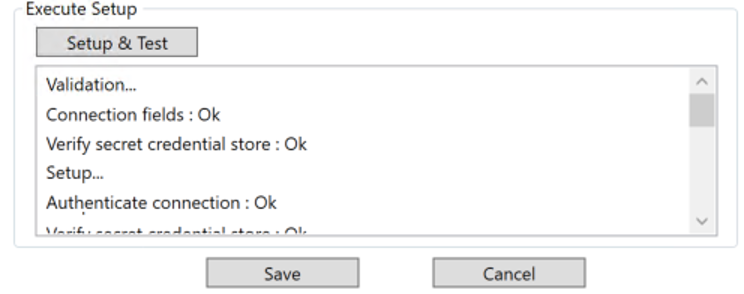
-
After a successful test has been completed, click the Save button.
-
Finally, click Yes to register this new connection (via your CI Sync Agent) with your customer specific CI Sync SaaS instance.
-
Assuming no errors you will see a confirmation message. Click OK and the new connection will appear in the Connections List of the CI Sync Agent.
-
You have now completed the setup of the source connection in the CI Sync Configuration Utility and registered it as a source connection in the CI Sync SaaS application.
Task 3 (Mongo): Or, Create a Source System Connection using the CI Sync Agent Config Utility with a MongoDB RecVer DB (if supported)
Click to expand the instructions to setup the source connection with a MongoDB RecVer
-
Run the “CISynchronizerAgent Config Utility” from the Windows Start Menu.
-
Within the CI Sync Agent Configuration Utility, navigate to the Source Systems tab, select Solarwinds and click the Add button.
-
The “Add Connection” form is shown (specific to the source system).
-
In the section titled “Settings for the CI Sync Windows Service” update the values as follows:
-
Name: Enter a friendly name that describes this source system connection.
-
URL: Enter the URL to the SolarWinds Orion platform identified in the very first task at the top of this guide.
-
User: Enter the username of the user created in the very first task at the top of this guide.
-
Password: Enter the password for the user created in the very first task at the top of this guide.
-
Timeout: Syncfish recommend initially setting this to 60 seconds.
-
-
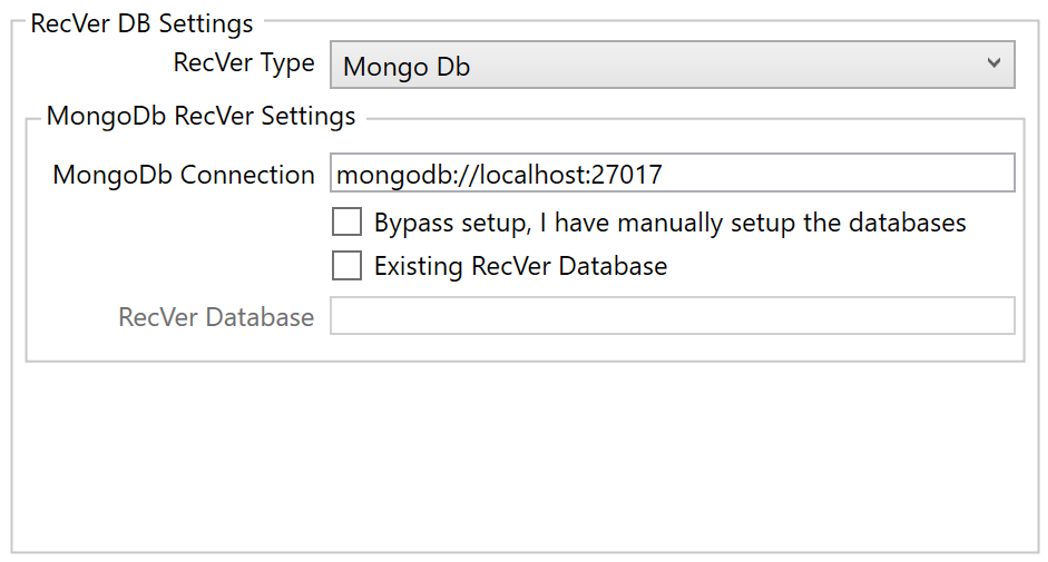
Move to section titled “RecVer DB Settings”
-
Update the “RecVer DB Settings” values as follows:
-
RecVer Type: Set this to Mongo Db.
-
-
In the sub-section titled “SQL Server RecVer Settings” update the values as follows:
-
MongoDb Connection: Enter the Mongo Db instance path in the format: mongodb://server.
-
Bypass setup: Do NOT check this checkbox unless you have been asked to do so by Syncfish (in most cases the Config Utility will be creating the RecVer database for you).
-
Existing RecVer Database: Do NOT check this checkbox unless you have been asked to do so by Syncfish (in most cases the Config Utility will be creating the RecVer database for you).
-
RecVer Database: This field will be greyed out in most cases (unless one of the above two options have been ticked). In most cases there is no existing RecVer database and therefore the Config Utility will automatically generate the name of the database when you click the “Setup & Text” button as part the next step in these instructions.
-
-
Locate the “Setup & Test” button
-
Do the following:
-
Click the “Setup & Test” button.
-
-
If all is setup correctly you will see “Ok” against each of the setup tasks. If you see errors recheck the values you entered on the form.
-
After a successful test has been completed, click the Save button.
-
Finally, click Yes to register this new connection (via your CI Sync Agent) with your customer specific CI Sync SaaS instance.
-
Assuming no errors you will see a confirmation message. Click OK and the new connection will appear in the Connections List of the CI Sync Agent.
-
You have now completed the setup of the the source connection in the CI Sync Configuration Utility and registered it as a source connection in the CI Sync SaaS application.
Task 4: Finalise Settings in the CI Sync SaaS UI
-
Login to your CI Sync SaaS instance at https://YourCo.syncfish.app
-
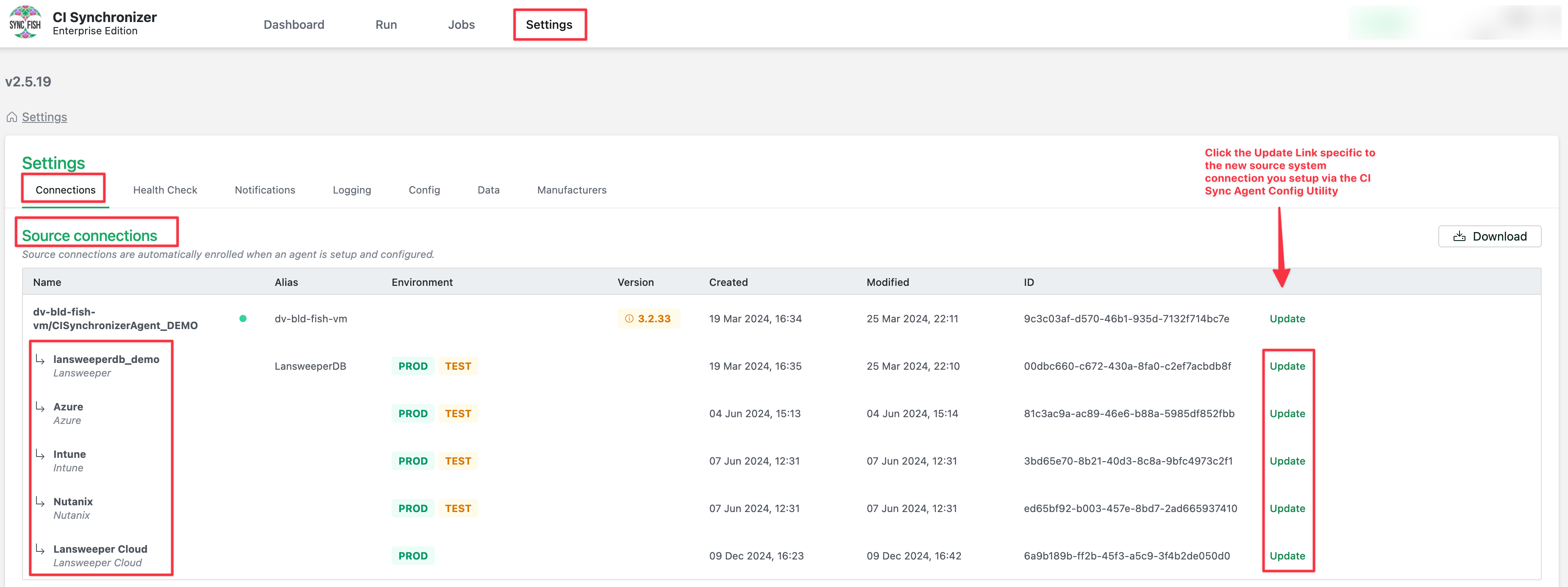
In the CI Sync UI, navigate to Settings > Connections.
-
Find the new source system connection you just added in the list of Source Connections (the screen shot above is a sample only).
-
Find your specific Source System Connection in the list and click the Update hyperlink (on the right hand side of the screen).
-
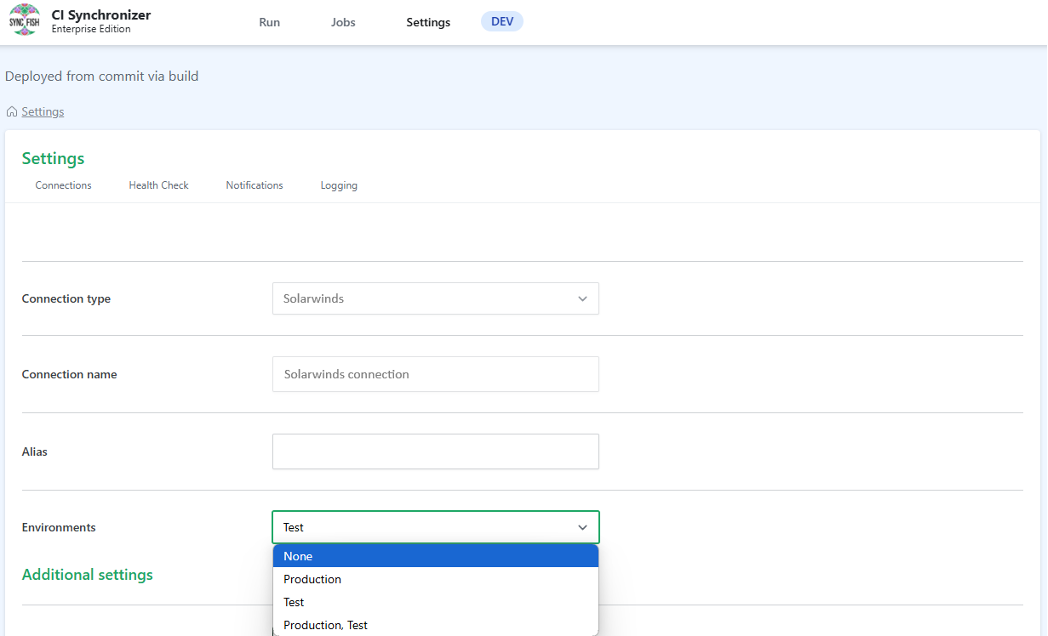
The connection Settings Form is presented. Update as follows:
-
Enter an Alias (optional) - the alias is only used in the CI Sync SaaS UI to show a friendly name in various UI forms.
-
Set the Environment/s the new source connection can be used for.
-
In most cases a Source System Connection is used for both Test and Production sync jobs (as distinct from the Destination Connections which can only be either Test or Production).
-
The Environment value is used to filter the connections dropdown list when you are creating a sync job.
-
-
-
While you are on this page you can/should check whether there are any connection specific settings you may want to adjust either now or at some point in the future. Connection specific settings (or just Connection Settings) allow you to override the default data sync rules for your CI Sync instance.
-
Read the following details to understand more about CI Sync Connection Settings:
-
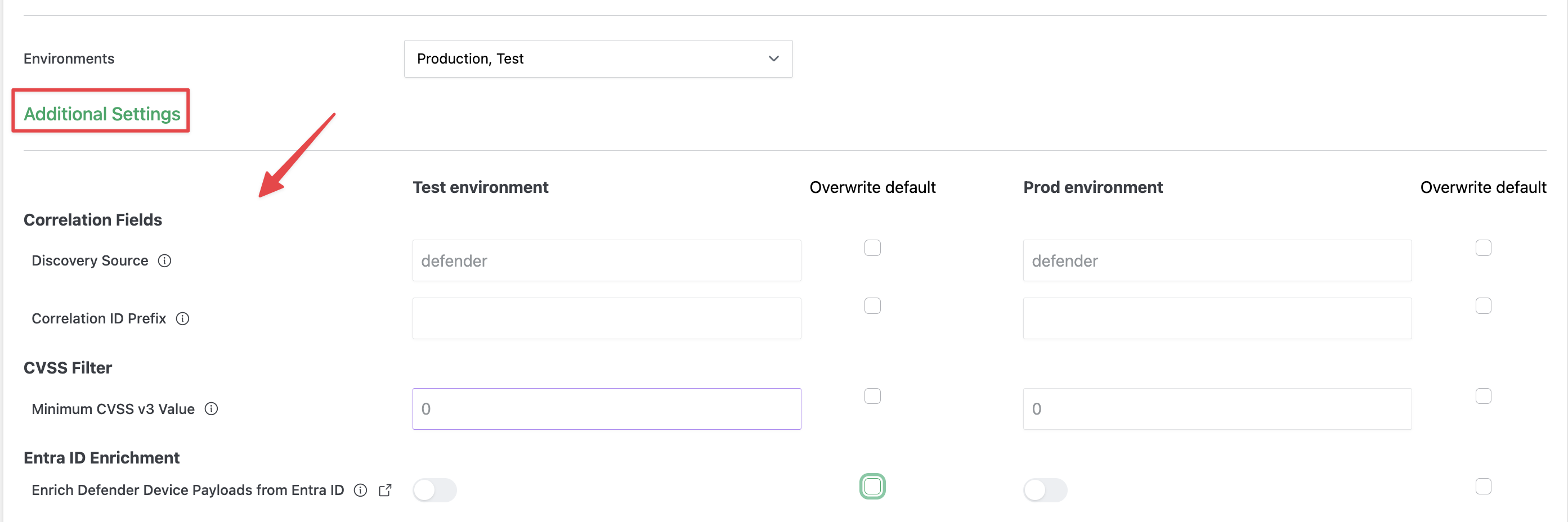
Scroll further down to the Additional Settings section on the page to see any available Connection Settings. Below is an example of the sorts of settings you might notice.
-
The settings are specific to each source connection so the screen shot is an example only.
-
Syncfish recommend you read the following documentation before overriding any of the default settings:
-
Read the CI SyncDefault Configuration Guides. The pages in that tree provide comprehensive information about the default behaviour of the CI Sync data sync rules, the options available for overriding those rules and typical reasons why you might want to do this.
-
Read Understanding the use of CI Sync Connection Settings. This page explains how the Connection Settings should be used, how to modify settings via the CI Sync UI and how to test any setting changes in non-production prior to production.
-
-
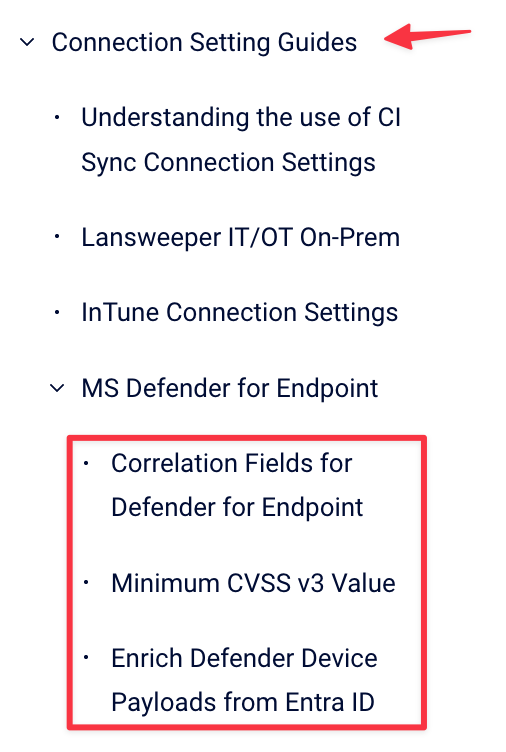
Finally, if you are ready to modify any of the Connection Settings, visit Connection Setting Guides and locate the specific Source System page/s in that tree. The individual pages in that tree provide detailed information about each setting.
-
-
After making any changes on this page, scroll to the bottom of the page, Check the consent checkbox and Click the Save connection button.
You have now completed all tasks to add your new Source Connection in the CI Sync Agent.
Please do one of the following:
-
Either add any additional source connections (using the relevant pages under Add Source Systems to On-Prem Agent)
-
Or if you haven’t do so already, then follow the instructions inS6 - Configure your ServiceNow for CI Sync.
Task 5: Perform Updates in ServiceNow (if required)
This task is not applicable as there are no updates required in ServiceNow for the source system connector described on this page.